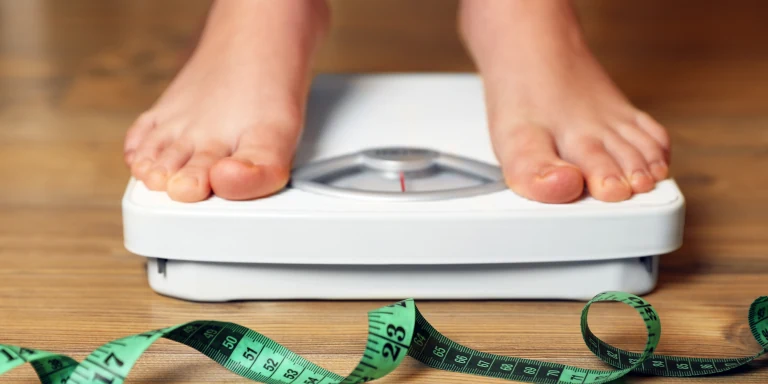
Obesity: definition, signs and treatment
Is obesity an illness? What classes of obesity are there, and what role does body mass index (BMI) play? What measures are included in obesity treatment? Find out about obesity, possible complications and treatments.
Overview of topics
What is obesity?
Obesity is a chronic, frequently recurring illness. People suffering from obesity have a significantly excessive body weight due to large amounts of fatty tissue. This means that their body fat percentage is particularly high. Around 12% of adults and 3% of children and adolescents in Switzerland are obese.
Experts differentiate between two patterns of fat distribution in obesity:
- Android (apple shape): fat is mainly stored around the abdomen and waist. This pattern of fat distribution carries a higher risk of complications than the gynoid pattern.
- Gynoid (pear shape): fat tends to accumulate on the hips and thighs.
Obesity classes and BMI
The World Health Organization (WHO) divides obesity into different classes. These are based on BMI, which can be calculated using a person’s height and weight. People of a normal weight have a BMI between 18.5 and 24.9. But at what point is someone considered obese?
- Class 1 obesity: this applies to people who have a BMI between 30 and 34.9.
- Class 2 obesity: this is where BMI is between 35 and 39.9.
- Class 3 obesity: this is also known as “morbid obesity” or “obesity permagna”. BMI in this class is 40 or more.
People with a BMI of 25 and above are considered overweight. If a person’s score is between 25 and 29.9, experts refer to it as “pre-obesity”, a precursor to obesity. Adults with a BMI of 30 or more are considered obese. “Overweight” is therefore a generic term for obesity and pre-obesity.
It’s important to note that some people may have a low percentage of body fat but a lot of muscle mass. As a result, their BMI will be high, but this does not mean they are obese. So remember not to focus solely on BMI, and speak to your doctor if you are severely overweight.
Obesity in children and adolescents
Experts do not look at set figures to compare weight in children and adolescents; instead, they use the weight of their peers of the same gender. They use “percentiles” to do this. These show how an individual’s weight compares to other children and adolescents.
- Children and adolescents are considered overweight if their BMI is higher than that of 90 out of 100 peers of the same age and gender.
- If it is higher than that of 97 out of 100 peers of the same age and gender, experts refer to this as obesity.
- If their BMI is higher than that of 99.5 out of 100 peers of the same age and gender, those affected are considered morbidly obese.
The further the weight of children and adolescents exceeds the values for their age group, the more overweight they are.
Obesity: what are the causes?
Obesity has several possible causes. If a person does develop obesity, there are usually several contributing factors.
- Nutrition: foods with a lot of fat and processed carbohydrates do not give the body much in the way of nutrients, but they do provide plenty of energy (calories). Examples include ready meals, fast food and soft drinks. The body stores excess calories as fat.
- Lack of exercise: cars, lifts and working at a computer screen all reduce the amount of exercise we get on a daily basis. This reduces the number of calories we burn as a result. People with low muscle mass also burn fewer calories, which increases the risk of obesity.
- Genetic predisposition: our genes influence our metabolism, our appetite and the rate at which we burn calories. They control how quickly the body burns calories and where it stores fat – around the abdomen and waist or on the hips and thighs. Obesity is therefore more prevalent in overweight families.
- Childhood experiences: children who develop obesity also have an increased risk of obesity as adults. In addition, studies have shown that children subjected to verbal, physical or sexual abuse are more likely to develop obesity later in life. In fact, the risk increases by around 8%, with those affected up to 17% more likely to become morbidly obese.
- Lack of sleep: if your body doesn’t get enough sleep, your hormonal balance becomes disrupted. This results in cravings and an appetite for high-calorie foods, which increases the risk of obesity.
- Hormonal disorders: in Cushing’s syndrome, the body produces too much of the hormone cortisol, causing it to store more fat. Women with polycystic ovary syndrome (PCOS) also tend to be overweight. In some cases, leptin resistance can cause people to become severely overweight. Leptin is a hormone that controls hunger and satiety. People who are resistant to leptin are less likely to feel full and more likely to feel hungry.
- Eating disorders: recurrent episodes of bingeing can cause obesity in people who suffer from a binge-eating disorder. Night eating syndrome can also lead to obesity. Those affected eat large amounts, especially in the evening and at night, but very little during the day.
- Medication: in some cases, medication can also cause obesity – examples include antidepressants and antiepileptics and certain types of medication used to treat high blood pressure or diabetes.
Obesity: what are the consequences?
Obesity can lead to many complications. These include the following:
- Type 2 diabetes: the risk of developing type 2 diabetes is at least three times higher in obese people than in those of a normal weight. Those affected may suffer from insulin resistance or an insulin deficiency, and their blood sugar levels are elevated.
- Cardiovascular illnesses: obesity sometimes leads to coronary heart disease, high blood pressure, heart failure or a stroke.
- Lipometabolic disorders: obesity increases the amount of certain lipoproteins in the blood and raises cholesterol levels.
- Gallstones: the risk of gallstones also heightens as a result of obesity. Experts suspect the trigger to be an increased amount of cholesterol in the bile.
- Fatty liver disease: the body stores triglyceride fats in the liver. If left untreated, cirrhosis of the liver may occur, which severely impairs liver function.
- Inflammation of the oesophagus: an inflamed oesophagus causes complaints such as heartburn and pain in the sternum area.
- Carcinomas: the risk of developing carcinomas – a form of malignant tumour – is up to twice as high. This applies in particular to carcinomas in the intestine and breast.
- Osteoarthritis: obesity can lead to osteoarthritis in the knee and hip joints.
- Back pain: being severely overweight puts a lot of strain on the spine. As a result, obese people often experience back pain.
- Hypoventilation syndrome: obesity sometimes causes a condition known as hypoventilation syndrome. Those affected experience headaches and occasional shortness of breath. They are often tired and sluggish during the day. Hypoventilation syndrome is frequently accompanied by sleep apnoea.
- Incontinence: obesity sufferers occasionally experience incontinence, as being extremely overweight places a lot of strain on the pelvic floor.
- Infertility: in some women, obesity can lead to infertility. This is because fatty tissue produces male hormones such as testosterone. In addition, increased insulin levels have an adverse effect on egg cells.
- Dementia: obesity makes you more likely to develop dementia. This applies primarily to vascular dementia. High blood pressure and diabetes – other consequences of obesity – are exacerbating factors.
- Mental health problems: obesity also contributes to depression, anxiety and body dysmorphic disorder. This is a mental illness in which those affected are excessively preoccupied with what they perceive to be flaws in their appearance, suffer as a result and are adversely affected at work or in their everyday lives.
In addition to these complications, obesity sufferers are usually unable to cope with physical exertion, or can only do so to a very limited degree. They sweat more, even if they are only doing light physical activity and the temperatures are low. Many of them suffer from shortness of breath and snore.
Obesity is not considered curable, but it is treatable. With the right obesity treatment, you will not only lose weight, but potentially keep the weight off for the long term. This is on the condition that you continue the treatment for the rest of your life.
What does obesity treatment involve?
Treating obesity involves various measures, including the promotion of activity and exercise, plus psychotherapy. There are also other approaches that we will go into in more detail below.
Obesity and nutrition
If you are obese and want to lose weight, changing your diet is a crucial step. It’s best to talk to a doctor or nutritionist about this. They will work with you to create a personal nutrition plan. If you are planning to change your diet, you should keep the following in mind:
- Make conscious choices when it comes to food. Choose fresh vegetables and wholegrain products wherever possible and avoid soft drinks. The best way to achieve a balanced diet is to use the Swiss food pyramid for guidance.
- Pay attention to portion size. You may be used to eating large amounts, so try to reduce your portions.
- Do not go on a low-calorie diet without consulting a specialist first. Experts recommend a maximum duration of 12 weeks for low-calorie diets, even if you are dieting under the supervision of a doctor.
- Avoid fasting completely or eating an unbalanced diet, as this can lead to the yo-yo effect: you may lose weight, only to find yourself quickly putting it back on.
Obesity and exercise
Regular exercise is an important part of treating obesity. It promotes weight loss and helps people keep the weight off in the long term. But not every type of sport is equally effective. Try combining strength and endurance training. Strength training increases muscle mass; as a result, the body burns more calories – even when at rest. In addition, the following endurance sports are particularly effective for obesity:
- Walking (brisk)
- Hiking
- Cycling
- Swimming
Which type of sport is suitable may depend on your obesity class. Speak to your doctor for advice; they will help you choose a suitable form of exercise to make sure you stay motivated in the long term.
Obesity medication
Doctors sometimes use medication to treat obesity. Common medications include the following:
- Orlistat: this active ingredient blocks the enzyme lipase, which breaks down certain fats. As a result, the body absorbs less fat and the patient loses weight.
- Liraglutide, semaglutide, tirzepatide: these are some of the active ingredients in “weight-loss jabs”. They curb your appetite, your stomach empties more slowly and it takes longer before you feel hungry again. As a result, you eat less overall. Liraglutide reduces weight by 7% to 10%, semaglutide by about 15% and tirzepatide by about 20%.
These obesity medications are only available on prescription. Bear in mind that obesity is a serious illness. Avoid over-the-counter medications that claim to be effective, and talk to a medical professional instead. If necessary, they will prescribe suitable medication and support you during your obesity treatment.
Obesity and surgery
An operation can sometimes be an option for people suffering from obesity, for example in the following cases:
- If their BMI is 50 or more, other forms of treatment offer little chance of success and the person has concomitant conditions which require rapid treatment
- If their BMI is at least 40, there are no concomitant conditions and other forms of treatment have been unsuccessful
- If their BMI is 35 or more, there is at least one concomitant condition and other forms of treatment have proved ineffective
Obesity operations are usually carried out in a clinic. Doctors use a variety of methods, and you should sit down with a specialist to discuss which procedure is best for you. Tried-and-tested methods include the following:
- Gastric surgery: this includes the gastric band, gastric balloon and sleeve gastrectomy. With a sleeve gastrectomy, a particularly common procedure, doctors remove around 80% of the stomach. What remains is a tube-shaped section that absorbs very little food. As a result, you eat less and feel full more quickly. In addition, the level of the hormone ghrelin, which increases hunger, falls.
- Malabsorptive procedures: a well-known method is Roux-en-Y gastric bypass. Doctors form a small pouch from a part of the stomach and attach it directly to the small intestine. This means the food gets there faster. Digestive juices from the gallbladder and pancreas and secretions from the excluded stomach are only added in the small intestine. As a result, you feel full more quickly, consume fewer calories over the long term and lose weight. However, as this means you also absorb fewer nutrients, you have to take supplements for life. A doctor will conduct regular checks to make sure you are getting enough vitamins and trace elements.
Psychotherapy and obesity self-help groups
Behaviour therapy can help you to change your eating habits in the long term. In-depth psychological support can also be beneficial if previous experiences or stress factors have contributed to the development of obesity. Sometimes psychotherapists also involve family members or close friends in order to find new approaches together (systemic psychotherapy).
Self-help groups may also be helpful. They give you the opportunity to talk to other people in a similar position and receive practical tips for everyday life. This can be a real source of motivation and make it easier to achieve personal goals. A coordination centre will help you find a suitable groupe.
Obesity: what will health insurance companies cover?
If you have class 1, 2 or 3 obesity, your health insurance company will support you in a number of ways. The conditions for payment of costs vary depending on the measure to be taken. If you meet the legal requirements, medications such as weight-loss injections can be covered under basic insurance.
In the case of operations, the contribution made by the health insurance company is linked to your BMI, among other aspects. If all the requirements are met, basic insurance will cover the costs.
Tip: with our SANA and COMPLETA supplementary insurance plans, we contribute to the cost of health-promoting exercise programmes. These are a crucial part of obesity treatment. By the way, have you heard about the Helsana Coach app and our health consultation service? You’ll find a range of exciting content on exercise and nutrition in the app, while our health consultation service can help you with all sorts of health issues, including nutrition, weight loss and exercise. All Helsana supplementary insurance policyholders can use this service free of charge.
People who suffer from obesity have to deal with the condition throughout their lives. However, there are measures that can help them cope with this chronic illness. If you are affected, talk to your doctor about a suitable form of obesity treatment. This will help reduce the risk of complications and improve your quality of life.

The specialist provided the editorial team with advice and input for this article. Andrea Bovisi (BSc BFH dietitian) works in the Helsana Health Consultation Service. She helps customers on issues to do with nutrition and health promotion.

Newsletter
Find out more about current health issues every month and get all the information you need about our attractive offers from all Helsana Group companies * delivered by e-mail to read whenever it suits you. Our newsletter is free of charge and you can sign up here:
We did not receive your information. Please try again later.
* The Helsana Group comprises Helsana Insurance Company Ltd, Helsana Supplementary Insurances Ltd and Helsana Accidents Ltd.