Children’s weight: BMI, growth charts and tips
Is my child overweight, and how can I help them lose weight? Is my child too thin, and what are healthy ways for them to gain weight? Learn how to assess your child’s weight properly using body mass index (BMI) and growth charts.
Overview of topics
What is a normal weight in children?
There is no universal normal weight for children. Experts assess weight in children according to age, height and gender. Only a combination of these factors allows for a realistic assessment.
Comparisons with peers using age-related BMI tables and growth charts (percentile curves) show whether the height and weight of the child are within the normal range. If the values do deviate from this range, it is advisable to consult a paediatrician. They will assess the severity of the deviation and whether the child’s health or nutritional status is affected.
BMI in children: what it means and how to calculate it
The first step in assessing children’s weight is to determine their BMI. This describes the ratio of weight to height and helps to estimate the proportion of body fat. Here’s how to calculate your child’s BMI:
- Weigh them: have your child stand on the scales in their underwear, without any shoes on and after going to the toilet.
- Measure their height: measure how tall your child is, without any shoes on and standing upright.
- Calculation: use the following formula: BMI = body weight in kg/height in m².
This formula applies to both boys and girls. However, BMI alone can only tell us so much. In children, the ratio of weight to height changes continuously with age. There are therefore no uniform limits for being overweight or underweight. To assess a child’s weight properly, we need to compare this value with age- and gender-specific growth charts. This is the only way to determine whether your child’s weight is within the normal range.
Good to know: the Health Promotion Switzerland Foundation website has a BMI calculator for children. All you need to do is enter your child’s age, height, weight and gender. You will receive an immediate assessment of whether your child’s weight is within the normal range or above or below it.
Growth charts for boys and girls: assessing weight properly
Growth charts show how weight, height and BMI normally develop during childhood. They contain what are known as percentiles, which indicate how often certain values occur in an age group. If a child’s weight is in the 50th percentile, it corresponds to the average.
During puberty, a child’s body changes depending on their gender – both in terms of muscle and fat content and in terms of development over time. It is therefore important to always consider a child’s weight and BMI in relation to age and gender. This is why there are different growth charts for boys and girls.
In Switzerland, the growth charts published by Pädiatrie Schweiz serve as the national reference values. They show the development of BMI in boys and girls:

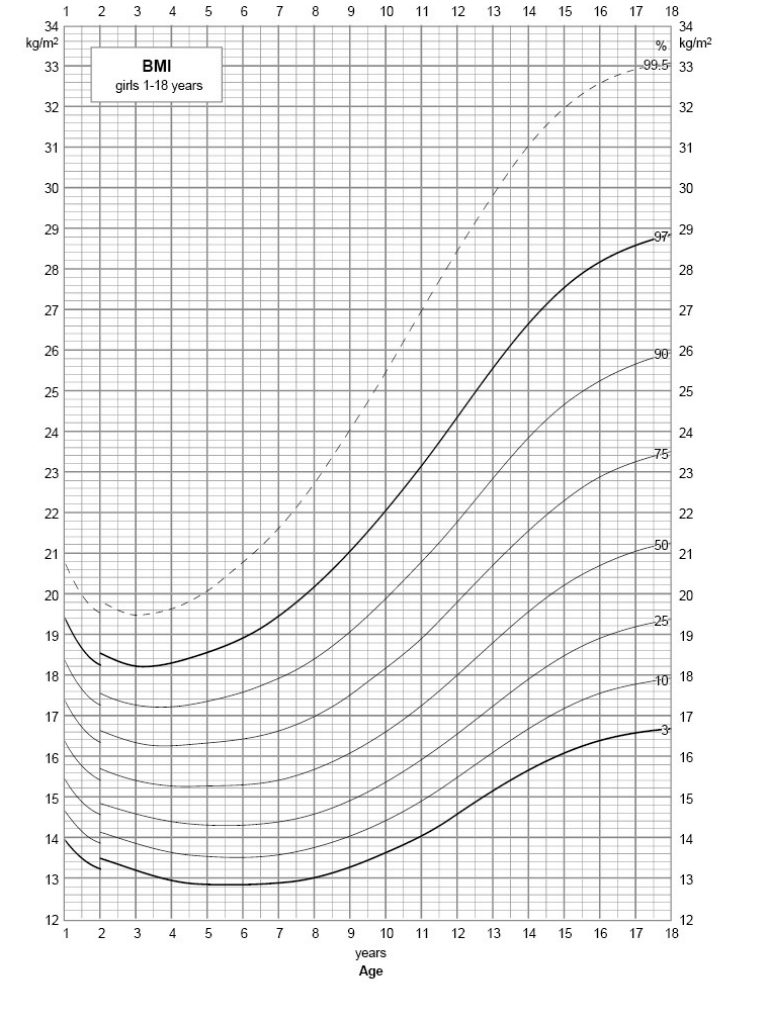
Compare your child’s BMI against the corresponding growth chart and check which percentile the value is in. You can then assess your child’s weight using this table:
|
|
|
|---|---|
|
|
|
|
|
|
|
|
|
|
|
|
|
|
|
Percentile
Result
<3rd percentile
Significantly underweight
<10th percentile
Underweight
10th–90th percentile
Normal
>90th percentile
Overweight
>97th percentile
Severely overweight (obese)
Example: weight of a three-year-old child
- Weight: 15.5 kg
- Height: 0.95 m
- Gender: male
- BMI: 15.5/0.95² = 17.2
The calculated value of 17.2 is around the 90th percentile on the BMI growth chart for boys. This means the child is slightly to moderately overweight. However, this value does not mean much on its own. Only after a full paediatric examination, taking into account the child’s general state of health and eating habits, can it be determined whether any action is in fact needed.
Growth charts for babies
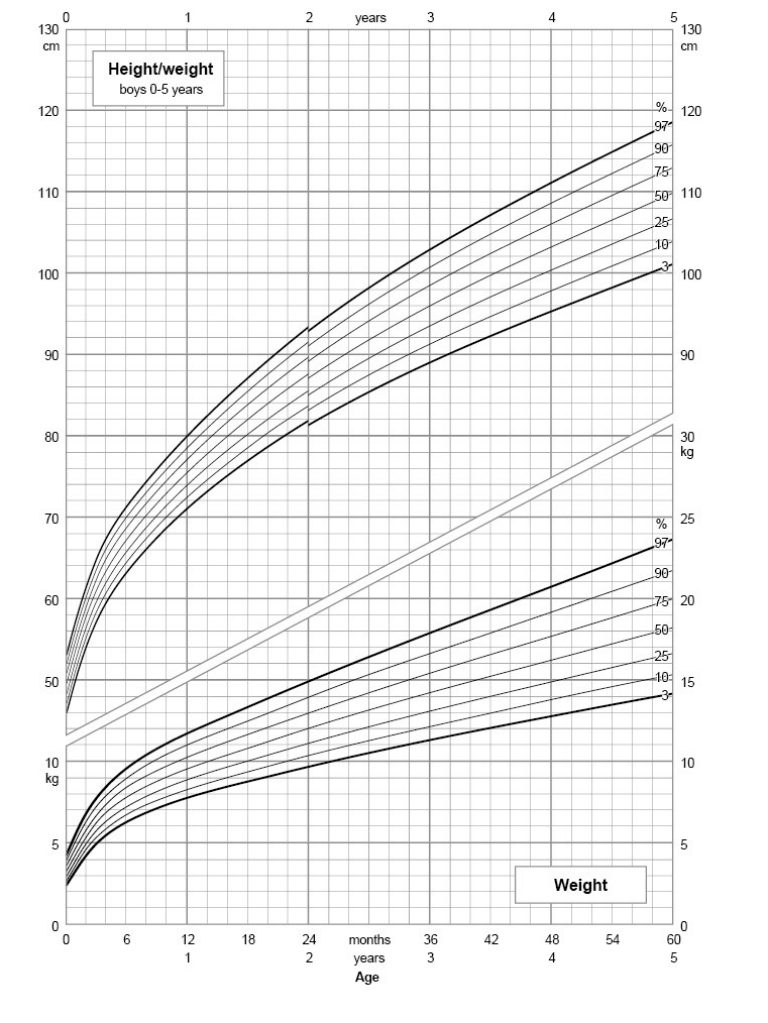
As a rule, BMI is not calculated for babies, as their fat and muscle mass and their height change particularly quickly. In the first few months after birth, for example, rapid weight gain is common – birth weight often doubles or even trebles during this time. Experts therefore use weight charts to classify these values for babies. Rather than focusing on a single measurement, medical professionals look at weight progression across several measurement points. Minor deviations are usually nothing to worry about.
These growth charts published by Pädiatrie Schweiz show the weight development of babies and children aged 0 to 5. They help experts to assess a child’s weight compared to that of other children in their age group:

At what point is a child considered overweight?
Boys and girls are considered overweight if their BMI value in the growth chart is above the 90th percentile. This means their weight and body fat percentage are significantly higher than those of the majority of children in their age group.
Overweight children: causes
There are various causes and risk factors when it comes to children being overweight. They often occur together and exacerbate each other.
- Unhealthy diet: overweight children often eat much more than their body needs. Sugary drinks, sweet snacks, high-fat foods and large portions in particular contribute to a calorie surplus.
- Lack of exercise: too little physical activity in everyday life means that the body consumes more calories than it burns. This can lead to being overweight.
- Media consumption: children who spend a long time in front of screens, whether a TV, computer or smartphone, are more at risk of being overweight.
- Genetic predisposition: a child is more likely to be overweight if one or both of their parents are severely overweight. Gestational diabetes also increases the risk of children being overweight.
- Mental strain: traumatic experiences, persistent stress or depression often influence eating habits. In situations like these, some children eat more (or more often) than usual and are prone to emotional eating.
Overweight children: consequences
For children, the consequences of being overweight are evident in various areas of their health. Being overweight is a known risk factor for cardiovascular disease, type 2 diabetes and certain types of cancer. In addition, many overweight children suffer from reduced quality of life and psychological problems that affect their self-esteem and social well-being.
It’s important to note that the more overweight a child is, the greater the risk of complications. If your child’s BMI is above the 97th percentile, they are severely overweight. Experts refer to this as obesity. Obesity is a chronic illness, so you should seek advice from a doctor if your child is affected by it. Extremely overweight children will often stay this way until they reach adulthood.
In rare cases, being overweight and obesity may be signs of an underlying disease. Possible causes include disorders of the adrenal glands and an underactive thyroid. If your child’s lifestyle is generally healthy and they do not eat very much but they are still overweight, a medical examination is recommended. Blood tests and comprehensive diagnostics will show whether they do indeed have a metabolic disorder. A specialist will explain to you what treatment is necessary in this case and which lifestyle adjustments would be helpful.
How do I tell my child that they need to lose weight?
Many parents wonder how to broach the subject of being overweight with their child. A careful approach and a great deal of tact are important, because being overweight is often a psychological burden as well as a physical one. The following tips will help you tackle the issue:
- Strengthen self-esteem: emphasise your child’s strengths, talents and abilities. Show them recognition, regardless of their weight.
- Express appreciation: avoid derogatory terms or comments about their figure or weight. Neutral, affectionate language promotes trust.
- Don’t draw comparisons: never compare your child to their siblings or other children. Every child develops at their own pace.
- Listen actively: be attentive to what your child says, take their concerns seriously and show them understanding.
- Take action together: work with your child to think about what changes you could make to their everyday life. You could also talk about goals and discuss healthy ways to lose weight.
Overweight children are often teased and bullied, which can cause them considerable distress. Many of them also feel rejected or marginalised. Talk to their school and seek support from psychological counselling centres at an early stage if your child becomes withdrawn, if they seem anxious about going to school or if you notice any other changes in their behaviour.
Tips for parents: how to help your child lose weight in a healthy way
As a parent, you have a big influence on your child’s approach to nutrition and exercise. If you set a good example yourself, your child will find it easier to develop healthy habits. Nurture a positive body image in them; it’s not about being a certain weight, but about well-being and health in general. Below are some ways you can help your child lose weight:
- Regular meals: fixed meal times create structure. If everyone eats together, it also helps children to follow a balanced diet.
- Healthy food: ensuring a balanced diet is particularly important for overweight children. The best way to do this is to use the Swiss food pyramid as guidance. Offer your child plenty of fruit and vegetables. Talk to them about the healthy foods they like and what new foods they might want to try.
- Reduce sugar: put them on a no-sugar diet and replace sweetened drinks with water or unsweetened alternatives.
- Stick to portion sizes: one portion is about the size of your child’s hand – as they get older and their hands grow, their portions will also get bigger.
- Chocolate and sweets: clear rules in terms of amounts and timing can help you control snacking. Not being overly strict on chocolate and sweets prevents cravings and makes sweet treats of secondary importance.
- Screen time: limit the amount of time your child spends in front of the TV, on computers or with smartphones and encourage active leisure pursuits.
- Exercise: plan activities together, such as going for walks or bike rides, and find sports that your child will enjoy.
Be patient with your child; developing new habits takes time. Involve your child in going shopping and when preparing meals, and make changes together as a family. This should make it easier for your child to lose weight. If you have any questions or are at all unsure, contact your paediatrician or a specialist advice centre – they can provide help for overweight children.
At what point is a child considered underweight?
Children are considered underweight if their BMI is below the 10th percentile. If your child’s weight remains at a very low level for an extended period of time, or if they show signs of tiredness or developmental delays, a medical evaluation is necessary. A specialist will help you assess their growth, nutrition and possible causes.
Underweight children: causes
There is rarely a single trigger for children being underweight. Often several factors combine to influence growth and weight. The most common causes of children being underweight are as follows:
- Genetic predisposition: some children are naturally slim – their physique and metabolism are heavily influenced by their genetic make-up.
- Metabolic disorders: hyperthyroidism or other hormonal disorders have a direct effect on energy levels and can contribute to a child being underweight.
- Gastrointestinal disorders: chronic complaints such as coeliac disease or inflammatory bowel disease often impair the absorption of nutrients and lead to low weight.
- Mental strain: stress, anxiety and eating disorders change eating habits and often restrict food intake.
- High level of activity: very active children consume a lot of energy. They may be underweight if their calorie intake is insufficient.
It’s important to note that BMI is only a guide. It does not explain the causes of a child being underweight, nor does it provide a comprehensive description of the state of their health. Doctors will therefore need more information in order to reliably assess the causes.
Underweight children: consequences
If a child is underweight for an extended period of time, this affects various aspects of their health. The following are particularly common in underweight children:
- Weakness and difficulty concentrating: a lack of energy leads to tiredness, exhaustion and reduced performance in everyday life and at school.
- Susceptibility to infections: being underweight often weakens the immune system, making colds and other infections more common.
- Growth and developmental disorders: a prolonged nutrient deficiency affects the body’s ability to grow, delays development and reduces bone density and muscle mass.
- Mental strain: being underweight often affects self-esteem and reduces quality of life. Many children feel weak and become withdrawn or find it difficult to socialise.
The nature and extent of the effects depend on how underweight the child is and for how long. So low weight does not automatically lead to serious consequences. However, an early medical examination is crucial if your child is underweight for an extended period of time.
Tips for parents: how to help your child put on weight in a healthy way
If your child is underweight, a nutritious diet and a positive eating environment are important. By taking a few simple steps, you can help them gain weight slowly and sustainably. The following tips will help you organise your daily routine accordingly and gently build up your child’s strength:
- Foods rich in energy and nutrients: offer your child foods that are high in calories and contain important nutrients. Examples include nuts, seeds, avocado, wholegrain products, cheese and vegetable oils.
- Several small meals: make eating little and often part of your child’s daily routine. Five to six servings spread out over the course of the day usually place less strain on the body than fewer, larger meals.
- Healthy snacks: complement your child’s menu with small snacks. Fruit with nut butter, yoghurt with oats or wholemeal bread with a nutritious spread are all suitable options.
- Eating together: make sure meals are relaxed affairs without any pressure. A pleasant atmosphere at the table stimulates the appetite and makes eating more enjoyable.
- Involving children: let your child take part in the shopping and cooking. That way, they’ll discover new dishes and ingredients and develop a positive relationship with food.
- Exercise: regular physical activity increases the appetite and at the same time contributes to healthy physical development.
Gaining weight takes time, so remember to be patient, avoid putting your child under any pressure and keep an eye on your child’s weight over a period of several weeks. By eating a balanced diet, you can set a good example for your child.
Weight fluctuations and being slightly overweight or underweight are common in children. Their height and weight can often change abruptly during growth spurts, but their weight will usually return to a normal value afterwards. Children are strongly influenced by behaviour within the family, and it’s easier to develop a healthy approach to nutrition in your child and encourage them to enjoy exercise if you lead by example. For peace of mind, schedule regular check-ups with your paediatrician. They will tell you whether your child’s weight is normal or whether further examinations are advisable.

The specialist provided the editorial team with advice and input for this article. Bettina Rieser (pharmaceutical assistant and social insurance specialist) works for Helsana’s health consultation service. She helps customers with issues to do with family and complementary medicine.


Newsletter
Find out more about current health issues every month and get all the information you need about our attractive offers from all Helsana Group companies * delivered by e-mail to read whenever it suits you. Our newsletter is free of charge and you can sign up here:
We did not receive your information. Please try again later.
* The Helsana Group comprises Helsana Insurance Company Ltd, Helsana Supplementary Insurances Ltd and Helsana Accidents Ltd.