
Boosting your metabolism: how it works
What boosts your metabolism and how can you get rid of belly fat? Why does your metabolism slow down with age and what other reasons are there for a poor metabolism? Find out more about your metabolism and how you can boost it.
Overview of topics
Metabolism: definition
The technical term “metabolism” describes all the chemical transformations in the body. For example, when you eat something, your body processes the nutrients, breaks them down into smaller components and uses them. In this process, it gains energy and transports food components. It also uses enzymes and coenzymes to build new substances and break down unnecessary ones. Metabolism is crucial for homeostasis. This is the state in which your body is in dynamic equilibrium and is able to function.
Experts sub-divide metabolism in different ways. One approach is to distinguish between anabolic and catabolic metabolism:
- Anabolic metabolism: how the body builds up chemical compounds.
- Catabolic metabolism: how the body breaks down chemical compounds.
Experts also occasionally refer to aerobic and anaerobic metabolism:
- Aerobic metabolism: you are at rest or exercising at moderate intensity. Your body uses oxygen to generate energy from fat and sugar.
- Anaerobic metabolism: you are exerting yourself physically for a short period of time. The energy gained from aerobic metabolism is therefore not sufficient and the body produces energy without oxygen.
Symptoms of metabolic disorders
You can recognise a disrupted metabolism by various symptoms. Significant factors include weight and performance. Experts use several methods to identify an unbalanced metabolism:
- Blood tests: these show how well your body processes nutrients and produces energy. In this metabolic analysis, a doctor checks your sugar, mineral and protein levels, for example. These values provide information on how well your metabolism is working.
- Metabolic rate: this shows how active your metabolism is. Experts can measure your metabolism by determining your oxygen consumption.
- Microbiome analysis: a high level of bacterial diversity in the intestine supports efficient digestion and nutrient absorption. An unbalanced microbiome and a reduced level of bacterial diversity in the intestine, by contrast, increase the risk of you becoming overweight. In a microbiome analysis, doctors examine the composition of your intestinal bacteria using a stool sample.
You can find out more about the other signs of a poor or fast metabolism below.
Poor metabolism: symptoms
There are several symptoms of a slow metabolism, including:
- Slowed growth, especially in children
- Slow heart rate
- Reduced performance and concentration
- Weight gain
- Sensitivity to cold temperatures
- Constant tiredness
- Constipation
Fast metabolism: symptoms
If your metabolism is very fast, you will notice this through various symptoms:
- Accelerated growth, especially in children
- Fast heart rate
- Weight loss
- Increased sweating and trembling
- Unease
- Diarrhoea
Reasons for metabolic problems
Our metabolism reacts to many different influences: some factors slow it down, others speed it up. The following sections describe possible reasons for a poor or very active metabolism.
Slow metabolism: causes
There are various possible triggers for a slow metabolism:
- Ageing: the metabolism slows down with age. The body stops growing and instead tries to maintain its existing body mass. It also breaks down muscle mass and builds up fat, which is why many people gain weight as they age. Hormones play a role, too: lower oestrogen levels in women and lower testosterone levels in men leave the metabolism less active. At what point does your metabolism start to slow down? This happens from around the age of 35.
- Poor diet: crash diets or strict fasting restrict your metabolism. If you consume too few calories, your body switches to energy-saving mode and your basal metabolic rate decreases. This includes the energy your body needs to maintain its functions.
- Lack of exercise: if you hardly get any exercise, your muscle mass will decrease. This also results in a lower basal metabolic rate and slower metabolism.
- Sleep disorders: a lack of sleep can inhibit your metabolism. While you sleep, your body produces hormones that regulate your metabolism. One possible cause of insufficient sleep is stress, which additionally influences the metabolism.
- Hormonal changes: the metabolism is also influenced by hormones, regardless of age. This is why gaining weight is common during pregnancy. Similarly, women’s metabolisms change after they stop breastfeeding. Furthermore, the body stores more belly fat in cases of prolonged stress, due to the stress hormone cortisol.
- Genetic influence: genetic predisposition affects the metabolism, too.
- Certain medications: there are some medications that inhibit the metabolism and may increase the appetite. These include antidepressants and cortisone preparations.
- Metabolic disorders: certain diseases worsen the metabolism. These include diabetes and obesity. Similarly, an underactive thyroid has an adverse effect on the metabolism.
- Dysbiosis of the intestinal microbiome: an imbalance in the intestinal flora can slow down the metabolism. Possible causes include antibiotics, a low-fibre diet, stress or chronic illness.
If you want to boost your metabolism and lose weight, it’s essential to get rid of belly fat. Belly fat – also known as abdominal fat or visceral fat – refers to the fatty tissue in the abdominal cavity. It surrounds the internal organs, especially the digestive system. Among other things, the stress hormone cortisol promotes the accumulation of belly fat.
Visceral fat influences the metabolism by producing hormones and releasing adipokines. These compounds have an effect on feelings of hunger and fullness, as well as on glucose metabolism. Furthermore, an increased proportion of visceral fat raises the risk of metabolic syndrome, which is associated with an impaired carbohydrate metabolism and can lead to insulin resistance.
Fast metabolism: causes
A fast metabolism can also be caused by several factors:
- Metabolic disorders: certain diseases affect the metabolism, such as hyperthyroidism.
- Lifestyle: getting plenty of exercise speeds up the metabolism, especially if you do a lot of strength training. This increases muscle mass and, as a result, your basal metabolic rate. The effect is even more pronounced if you eat a balanced diet as well.
- Genetic factors: an active metabolism is sometimes also genetic.
What boosts the metabolism?
When people talk about “boosting their metabolism”, they often mean breaking down carbohydrates and fats. Belly fat is particularly relevant because it releases hormones that affect the metabolism.
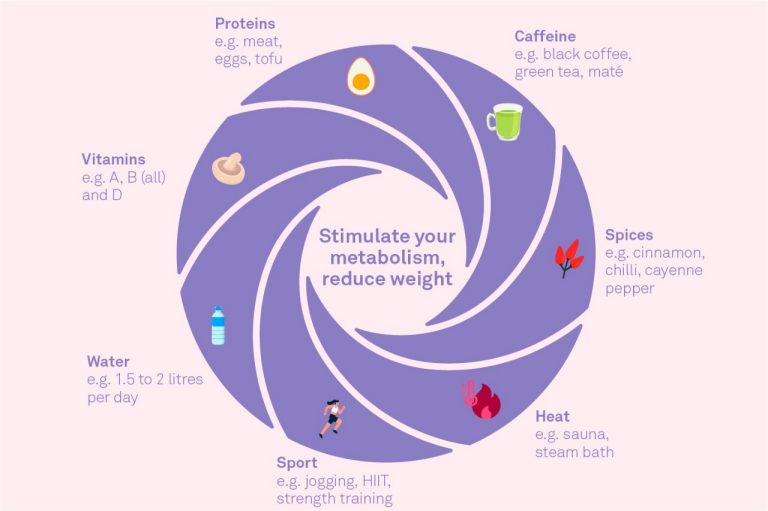
Boost your metabolism and get rid of belly fat: nutrition
Want to boost your metabolism? The following foods and nutrients will help:
- Water: ideally, adults should consume 2 to 2.5 litres of water a day. This supports the metabolism. Good to know: if you follow the Swiss food pyramid, you will already be consuming around one litre of water through your food.
- Protein-rich foods: you can also boost your metabolism with protein. Protein is an important source of energy and is therefore indispensable for an active metabolism. It can be found in meat, eggs, tofu, seitan and tempeh, as well as in dairy products such as quark, cheese and yoghurt.
- Vitamins: vitamins are essential for the metabolism. The body needs vitamins for numerous biochemical reactions, but it cannot produce them itself or can only produce them in small quantities. A good metabolism therefore requires a diet that’s rich in various vitamins. Vitamin A is found in butter, carrots and sweet potatoes, for example. You can find vitamin B12 in animal-derived foods such as calf’s liver, salmon, eggs and natural yoghurt. Vitamin D is also important for the metabolism. However, the body primarily produces vitamin D itself when exposed to sunlight. Whitefish, halibut, salmon, porcini mushrooms and eggs provide small amounts of vitamin D. Other vitamins, minerals, trace elements, amino acids, fatty acids and secondary plant substances important for the metabolism include B vitamins, magnesium, calcium, selenium, zinc, copper, chromium, Q10 and niacin as well as the amino acids L-arginine, L-carnitine, tryptophan and glutamine.
- Cholesterol: cholesterol is also required for a good metabolism. It helps the body to produce certain hormones. However, making cholesterol-conscious food choices is particularly important. It’s best to opt for foods that contain plenty of unsaturated fatty acids, such as nuts, avocados and salmon, and only eat foods with saturated fatty acids such as cream or sausages occasionally.
- Caffeinated drinks: caffeine, for example in coffee, may boost your metabolism.
- Household remedies such as spices and tea: natural home remedies may be used to boost your metabolism. Try spices such as cinnamon, chilli or cayenne pepper. Special metabolism-stimulating teas can boost the metabolism, too. These home remedies contain ingredients like fennel, peppermint, dandelion and birch leaves.
Good to know: alcohol has an adverse effect on the metabolism. It inhibits fat burning, impairs muscle growth and increases insulin secretion. It also reduces your appetite, so you eat fewer nutritious foods. At the same time, the body is less able to process vitamins such as vitamin B6, vitamin C and folic acid. You can therefore support your metabolism by consuming alcohol in moderation.
Experts generally recommend a balanced diet, as this supports your metabolism and ensures you consume all the important nutrients.
The menopause generally begins between the ages of 40 and 45. The resulting changes to your hormone levels influence the metabolism: although your energy requirements decrease, your need for proteins, vitamins and minerals remains largely the same. This means that the best way to boost the metabolism after the age of 40 is to eat a balanced and nutrient-rich diet. Eat one portion of fresh fruit a day – ideally as a dessert after lunch. Fresh vegetables, wholegrain products and sufficient protein are also a good idea. Avoid high-fat foods where possible. Tip: take the Mediterranean diet as a guide.
Boosting your metabolism: muscle building and exercise
Regular exercise helps to boost your metabolism. Both endurance and strength training are great ways to do this. The latter is ideal for muscle building.
Swimming, cycling and jogging, for example, activate the metabolism and promote endurance. The same applies to high-intensity interval training (HIIT). Combine this with strength sessions. These will help you build muscle mass, which increases your basal metabolic rate. If you want to boost your metabolism and get rid of belly fat, try these exercises:
- Push-ups: kneel on a sports mat and, supporting yourself with your hands, bend your upper body forward. Lift your feet so only your knees and hands are touching the floor. Raise and lower your upper body by bending and straightening your arms.
- Planks: lie on your stomach and support yourself on your forearms and the tips of your toes. Your shoulders should be level with your hips. Remain in this position for 30 to 90 seconds.
Use these exercises to work your legs as well:
- Lunges: take a large step forward with your right leg. Lower your knees so that your front leg forms a right angle. Repeat the exercise on the other side.
- Leg lifts: stand up straight with your feet shoulder-width apart. Now bend your knees slightly and raise your right leg in front of you. At the same time, bend your standing leg a little more. Use your arms for balance. Then repeat the exercise with your other leg.
Be active in your day-to-day life. For example, take the stairs instead of the lift. Work standing up if your job permits – for example, when making phone calls. Walk short distances and avoid driving whenever possible. You can also meet up with friends and go for a walk together.
A slower metabolism is normal during pregnancy. What can you do to boost your metabolism afterwards? Start exercising gradually. However, discuss this with your gynaecologist first.
Postnatal courses are particularly useful and will show you what exercises you can use to train your pelvic floor, build muscles and in doing so gently boost your metabolism. After the course, make sure you get enough exercise in your daily life to support your metabolism in the long term.
Boosting your metabolism with metabolic therapy
Some people opt for special therapy to convert their metabolism to burning fat. You should always carry out metabolic therapy of this kind under the supervision of a specialist such as a naturopath, nutritionist or doctor. One example of such therapy is to reduce your calorie intake over a period of 21 days, during which you only eat foods that are low in carbohydrates and low in fat. You mainly consume protein-rich foods such as lean meat, tofu, berries and low-fat quark and only drink water, unsweetened tea and black coffee. After the diet phase, you gradually start to consume more calories, but continue to avoid high-fat and sugary foods.
It’s important that you speak to your doctor before starting any metabolic therapy. They will discuss with you whether this is really necessary and explain the alternatives to you.
Saunas and an active metabolism
Going to the sauna can boost your metabolism. A trip to the sauna ideally consists of 3 sessions of a maximum of 15 minutes each. Be sure to listen to your body and stop the session if you feel unwell.
Do you prefer the cold to the heat? Then ice bathing or winter swimming might be up your street, as these can also help stimulate your metabolism.
If you want to boost your metabolism, every serving of vegetables, every walk and every workout counts. These will help promote an active metabolism while reducing your risk of belly fat. Are you unsure? Talk to your doctor. They will tell you which measures are particularly suitable for you.

The expert in this field provided the editorial team with advice and input for this article. Eliane Wyss (medical assistant and nutrition coach) works in the Helsana health consultation service. She supports customers on questions to do with nutrition and other health topics.


Newsletter
Find out more about current health issues every month and get all the information you need about our attractive offers from all Helsana Group companies * delivered by e-mail to read whenever it suits you. Our newsletter is free of charge and you can sign up here:
We did not receive your information. Please try again later.
* The Helsana Group comprises Helsana Insurance Company Ltd, Helsana Supplementary Insurances Ltd and Helsana Accidents Ltd.