
Healthy eating: tips and examples of a balanced diet
From breakfast to dinner: what is a healthy and balanced diet? What foods make up a good meal and how can I eat healthily day-to-day? Find out what a healthy diet means.
What makes up a healthy and balanced diet?
A healthy and balanced diet is the basis for your health, well-being and quality of life. It’s not the individual foods that count, but how you combine different foods. In addition to vegetables, salads and fruit, these include many other foods. The optimal amount of which food group you eat also depends on your age and stage of life.
By the way, in this article, we understand a “healthy diet” primarily to mean the quality of individual foods: the less processed foods are, the more good nutrients such as vitamins and fibre are usually left in them. A “balanced diet” also means that a variety of nutrients come together on your plate. These include proteins, vitamins, carbohydrates and fats. Variety is key, rather than a one-sided diet.
A healthy diet has several benefits. It prevents diet-related illnesses and improves your physical and mental performance. A balanced diet can also help combat stress and improve your mental well-being.
The building blocks of a balanced diet
Colourful, varied and tasty: these food groups belong on your plate if you want to eat a balanced diet:
|
|
|
|
|
|
|
|
|
|
|
|
|
|
|
|
|
|
Food group
Why is it important?
Unsweetened beverages
Make sure you drink enough – around two litres a day. Opt for tap or mineral water or unsweetened teas. Fluid provides your skin and tissues with moisture and regulates your body temperature.
Fruit and vegetables
You should aim to eat three portions of vegetables and two portions of fruit a day (“5 a day”). These are rich in fibre, vitamins, minerals and secondary plant substances that protect the cells.
Grain-based products and potatoes
These foods supply your body with carbohydrates in the form of starch. They provide energy for the muscles, brain and other organs. For a balanced diet, opt for wholegrain products, such as wholemeal bread, rice or flakes.
Animal products and pulses
Meat, fish, eggs, chickpeas and soya beans provide you with protein and keep you full for longer. A balanced, protein-rich diet provides important building blocks for your immune system and helps you build and maintain muscle.
Oils, fat and nuts
Fat provides your body with energy, among other things. However, only eat high-fat foods in moderation. Opt for plant-based fats: a healthy diet includes olive oil, rapeseed oil, linseed oil and nuts, for example.
Bear in mind that salty, sweet and alcoholic foods and drinks provide a lot of energy – i.e. calories – in the form of sugar, fat or alcohol. However, they contain hardly any valuable nutrients such as vitamins or minerals. You should therefore enjoy crisps, chocolate and a glass of wine in moderation.
A balanced diet: what an ideal plate looks like
The Swiss food pyramid – also known as the nutrition pyramid – and the plate model developed by the Swiss Society for Nutrition (SSN) show which foods are part of a healthy diet. Both models show you what a healthy plate looks like.
The plate shows a single meal, divided into fruit and vegetables, starchy foods and high-protein foods. The five building blocks from the table above are divided into three large portions. The pyramid provides a complete picture for an entire day and shows you the recommended amounts of the individual food groups.
A balanced meal
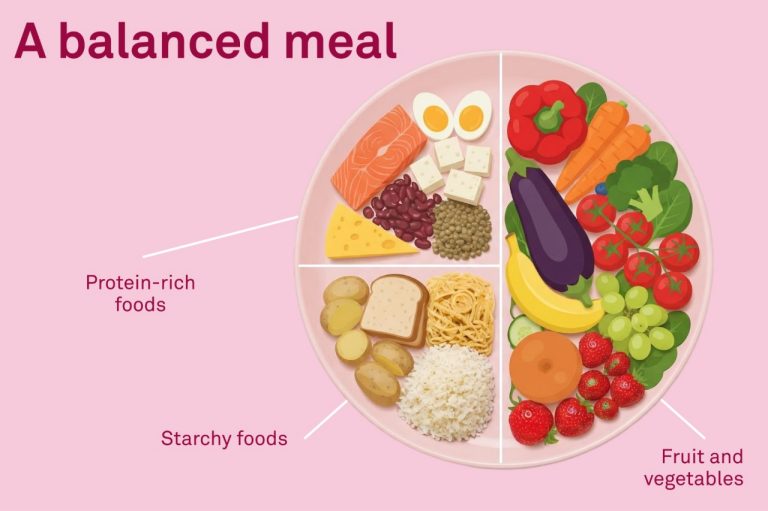
The plate model: for a balanced meal, half the plate is filled with fruit and vegetables. The remaining half of the plate is divided equally between protein-rich foods and starchy foods.
A vegetarian or vegan diet can also be healthy. Vegetarians continue to eat eggs and dairy products. This means their protein, calcium and vitamin B12 needs are usually covered. Those following a vegan diet avoid eggs, dairy products and honey, meaning they miss out on these important sources of nutrients. Vitamin B12 is almost exclusively found in animal-based foods, which is why vegans often take this vitamin as a dietary supplement. Vegans also need to pay close attention to the amount of calcium, iron and protein in their diet. Pulses, tofu, nuts and calcium-rich vegetables such as broccoli and spinach can help.
Tips for a healthy diet day-to-day
You can develop good eating habits and modify your diet sustainably if you proceed step by step. The following tips will guide you – from grocery shopping to arranging your plate – and will help you maintain a balanced diet even in your hectic everyday life:
- Drink enough fluids: you can’t store fluids for later. It’s therefore best to drink unsweetened drinks throughout the day. If you need a bit of variety, opt for tea or water with lemon juice and mint.
- Pay attention to the list of ingredients: look at the ingredients before you add a product to your shopping trolley in the supermarket. This enables you to identify wholegrain products, for example. As a general rule, the higher the ingredient is in the list, the more of it a product contains.
- Discover a wide variety of food products: if at all possible, opt for unprocessed and seasonal products.
- Follow the plate model: fill your plate with three food groups at every main meal.First, vegetables, salad or fruit. Second, starchy side dishes such as potatoes, rice, pasta or wholegrain cereals. Third, protein-rich foods such as meat, eggs, tofu, pulses, fish or cheese.
- Prepare for on the go: portion vegetables, fruit or a handful of nuts in advance and take them with you when you’re on the go or at work.
- Reduce sugar and salt: jazz up your water with seasonal fruits instead of sugar. Season with herbs instead of salt.
- Carefully prepare food: cook your food in a steamer or sieve insert. Avoid cooking food for too long to preserve more nutrients.
- Build up reserves: store rice, pasta, dried fruits and legumes in storage containers. Oils such as olive or rapeseed oil as well as UHT milk and well-packaged nuts are also suitable for storing in your pantry. This way, when you’re pressed for time, you’ll have plenty of food ready.
- Relax and eat mindfully: eat mindfully and enjoy every mouthful. The feeling of satiety only sets in after about 20 minutes. People who take their time often automatically eat less.
By the way – exercise complements a healthy diet. The ideal amount of exercise for you depends on your age, gender and state of health. Just a little exercise in your day-to-day life makes a difference – whether climbing stairs, walking to work or a short stroll after a meal. The consequences of a lack of exercise may manifest themselves in minor symptoms such as tiredness, tension or lack of motivation.
Step-by-step towards a balanced nutrition
The Helsana Coach app offers you numerous tips on how to maintain a balanced nutrition including delicious recipes for breakfast, lunch or dinner. With the help of the app, you can gradually optimise your nutrition. Download the Helsana Coach now.


Daily plan for healthy nutrition
Would you like to apply these tips right away? Here you can find simple inspiration for everyday recipes from Natalie Bez, nutritionist (SVDE) and researcher at the Bern University of Applied Sciences.
Enjoy a varied breakfast
- Idea 1: mix oats with a finely chopped apple or other fruits such as berries or apricots. Add plain yoghurt or quark and a few nuts.
- Idea 2: spread butter on a slice of wholemeal bread and top with cheese or ham and crunchy cucumber slices.
- Idea 3: how about some scrambled or boiled eggs? Serve with wholemeal bread and cherry tomatoes.
Eat a healthy lunch
- Idea 1: finely chop lettuce, carrots, tomatoes and cucumber. Mix with chickpeas and cottage cheese. Serve with a slice of wholemeal bread or a few crostini.
- Idea 2: fry some eggs. Serve with boiled potatoes and boiled spinach.
- Idea 3: chop vegetables into small pieces for an Asian stir-fry. Fry them over a high heat and add tofu and rice. Sprinkle with a handful of cashew nuts.
Healthy nutrition in the evening
- Idea 1: boil potatoes in their skins and serve them with herb quark. Raw vegetable sticks (cucumber, carrot, kohlrabi and radish) complete the dish.
- Idea 2: boil lentils. Add carrots, tomatoes and broccoli. Heat up some pita bread as well. If you like, add some chilli and/or crème fraîche to the vegetables.
- Idea 3: purée a pumpkin into a creamy soup. Wholemeal bread and cheese complete the meal.
A balanced diet starts with breakfast and ends with dinner. In the Helsana Coach app you’ll find plenty of tips on healthy nutrition for beginners and those with more experience. With the help of the nutrition programme, you can gradually change your diet.
Eating healthily at every stage of life
Your dietary needs change over the course of your life. From toddler to old age, there’s something different on your plate at every stage.
Optimal nutrition in childhood and adolescence
What your child eats today will shape their taste preferences for life. By about the age of twelve, these preferences are largely established. That’s why it’s a good idea to put a wide variety of foods on their plates early on. You can use the Swiss food pyramid as a guide. Your child will also mimic your own behaviour at the table. Enjoy your food and set a good example. Let your child decide for themselves how much they eat. That’s how they learn to listen to their feeling of satiety.
Good eating habits are also important for adolescents, who eat an increasing number of their meals outside the home. That’s why you should cook together and take them with you when you go shopping. Compare, for example, two similar products and take a look at the list of ingredients together. This allows young people to see for themselves how much sugar a processed food contains and develop a better understanding of healthy and balanced food.
Healthy nutrition during pregnancy and breastfeeding
Ideally, what you eat during pregnancy should provide all the essential nutrients – especially folic acid. Also avoid raw meat, raw fish and raw milk products as they may contain listeria, which can cause dangerous infections.
A healthy diet is just as important when breastfeeding. Some foods such as onions, cabbage or garlic may cause flatulence in your baby, so keep an eye on what your child can tolerate.
A balanced diet in old age
As the body ages, it gradually breaks down its muscles. The right diet in old age is therefore high in protein. Spread out protein-rich foods throughout the day. Meat, fish, eggs, cheese and pulses are very good sources of protein.
Overview of healthy diets
These basics of a balanced diet can be implemented in different ways. The following diets essentially meet the same recommendations of the Swiss Society for Nutrition (SSN) – but with different focus areas:
- Mediterranean diet: the Mediterranean diet emphasises vegetables, whole grains, fish and olive oil – just like in traditional cuisines around the Mediterranean. Red meat and heavily processed foods are seldom eaten. This diet is considered particularly well balanced and is associated with a lower risk of cardiovascular disease.
- A no-sugar diet: in a no-sugar diet, you essentially erase added sugar from your diet – i.e. sugar that manufacturers add to their foods, such as soft drinks, processed products or sweets. The natural sugar in fruit or vegetables doesn’t count. This helps to prevent fluctuations in blood sugar levels and also protects the teeth.
- Epigenetic nutrition: epigenetic nutrition is based on the idea that certain foods influence the way your genes work, without altering the genetic material itself. It focuses on foods containing many secondary plant compounds – natural protective substances – such as broccoli, garlic, green tea or berries. The diet is similar to Mediterranean cuisine: lots of vegetables, good fats and foods that are as unprocessed as possible. However, research into this diet is still in the early stages.
A healthy and well-rounded diet requires one thing above all else: the right balance. If your diet includes fruit and vegetables, whole grains, proteins, healthy fats and enough fluids every day, you’ve already laid the most important foundation. Enjoying your food is also part of this. What’s more, you don’t have to change everything at once: even small changes can make a difference – together with a little exercise. Pay attention to your body, try new things and adapt your meals to your daily routine. This way, healthy nutrition doesn’t mean giving things up – it’s about making you feel good for the long term.

The expert provided the editorial team with advice and input for this article. Natalie Bez is a nutritionist (SVDE) and researcher at Bern University of Applied Sciences with a focus on obesity treatment, nutritional psychology and plant-based nutrition.


Newsletter
Find out more about current health issues every month and get all the information you need about our attractive offers from all Helsana Group companies * delivered by e-mail to read whenever it suits you. Our newsletter is free of charge and you can sign up here:
We did not receive your information. Please try again later.
* The Helsana Group comprises Helsana Insurance Company Ltd, Helsana Supplementary Insurances Ltd and Helsana Accidents Ltd.