Why exercise is so important for children
When children play and move their bodies, this promotes far more than their physical development. Exercise impacts the body, emotions, psyche and brain at once – making it a key building block for healthy development.
Overview of topics
Why exercise is so important for children
Children have a strong natural need to exercise. This urge to move isn’t a “surplus” of energy, but a key part of their development. Through exercise, children learn about their environment, get to know their bodies and gain important experiences for their health, learning and social conduct.
By extension, exercise is much more than just a leisure activity: it lays the foundations for a healthy life.
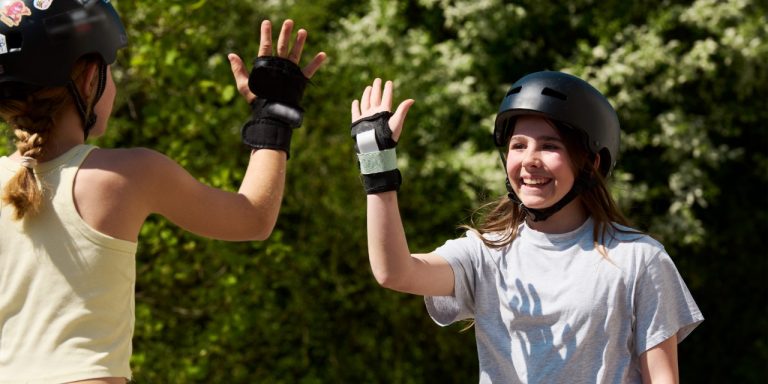
The story of Emilia (12) from the Zurich region shows what this can mean in concrete terms. She is one of the few girls at her school who skate. In a three-part video series, she explains how she discovered her passion for skating, what obstacles needed to be overcome to start with and why she stuck at it.
How exercise helps children
Physical development
An active lifestyle fortifies the immune system and helps build stable bones. Regular exercise also strengthens your muscles and improves the performance of your cardiovascular system. Exercise assists children with honing their motor skills, coordination and body awareness, giving them a greater sense of security day to day.
In addition, physical activity helps children stay at a healthy body weight and can aid in reducing the risk of issues such as becoming overweight or developing type 2 diabetes in childhood.
Emotional and social development
Physical activity helps children to better regulate their feelings and develop a stable self-image. Exercise strengthens their trust in their own abilities and promotes social skills. By playing or exercising together, children learn rules, respect, how to share and how to manage conflict.
Dealing with successes and failures is also part and parcel of this – an aspect that often greatly supports children’s growth. In the video, Emilia explains what motivates her to stay focused even when times get tough and where she gets support.
Mental health
Regular exercise also has a positive effect on mental well-being. It can help reduce stress, relieve tension and promote positive emotions. Children who exercise regularly often find that they are more balanced and resilient in their day-to-day lives.
Brain development
Exercise supports brain development by improving blood circulation and encouraging the networking of nerve cells. Physical activity promotes concentration and learning, amongst other benefits.
How much exercise do children need?
The Swiss Federal Office of Sport (FOSPO) and the WHO recommend an average of at least 60 minutes of moderate to high-intensity exercise per day for children and young people aged five and over. Toddlers and pre-school aged children need to be physically active for at least three hours a day. They should take frequent breaks during long sedentary periods.
Studies from Switzerland show that the physical activity level of many children and adolescents decreases significantly as they age. During puberty in particular, fewer and fewer young people get the recommended amount of exercise and many give up clubs that they used to attend. This makes it all the more important to have positive experiences of exercise at a young age.
How parents can encourage children to exercise day to day
You DON’T need to go to any great lengths to incorporate exercise into your daily routine. Often, small changes are enough: walk or cycle to your destination, go to the playground together or incorporate short, playful breaks for exercise. A relaxed, unpressured atmosphere where the child can go at their own pace is crucial.
Parents shape their children’s exercise habits
Children are much more active when their parents are too. The impact of having a role model resonates for years and is one of the strongest factors in a lasting, positive relationship with exercise. Shared experiences often have a stronger impact than any PE class.
How can a child find the right activity?
By trying things out. Whether climbing, cycling, dancing, ball games or skating, it usually doesn’t take long for children to show what makes them happy. Exercise is sustainable when a child continues to engage with it voluntarily and displays curiosity.
If children do not exercise enough on a sustained basis, this lack of exercise can hinder their physical and mental development and increase their risk of becoming overweight and suffering other health problems.
People who exercise as part of a club or in groups often stay active for longer. Team spirit, fixed training times and community provide stability – especially in puberty. It’s easier to stay on track in a team, even if your motivation starts to wane.
Why early success is key
The results of the SOPHYA study show how important early, positive experiences of exercise are. Children tend to stay active in the long term if exercise is linked to joy, a sense of achievement, community and a supportive environment.
It’s not perfection that counts, but the enjoyment of exercise: if children experience the benefits of exercise at an early age, this often stays with them into adulthood.
Emilia’s story also shows what a lasting impact these experiences have: exercise not only changes the body, but also often impacts self-confidence, everyday life and a sense of belonging. The third part of her story illustrates how exercise can have an effect over a longer period of time.
Our health consultation service provides you with practical tips on exercise, prevention and wellbeing – offering personal, competent advice free of charge for anyone with Helsana supplementary insurance.
Call us: 058 340 15 69

The physiotherapist provided the editorial team with advice and input for this article. Stefan Wöll (graduate in physiotherapy) was working for Helsana’s health consultation service at the time of writing the article.

Newsletter
Find out more about current health issues every month and get all the information you need about our attractive offers from all Helsana Group companies * delivered by e-mail to read whenever it suits you. Our newsletter is free of charge and you can sign up here:
We did not receive your information. Please try again later.
* The Helsana Group comprises Helsana Insurance Company Ltd, Helsana Supplementary Insurances Ltd and Helsana Accidents Ltd.