
Muscle: types, structure and functions
Every step, every breath and every heartbeat – our muscles keep our bodies moving round the clock. But what do smooth muscle, cardiac muscle and skeletal muscle actually do? Find out everything you need to know about human muscle.
Muscles in the body
Without muscle, we wouldn’t be able to stand or even smile. Our muscles control important bodily functions such as breathing, digestion and the heartbeat. They also help to keep the body warm. Muscle tissue is made up of muscle cells, known as myocytes. The human body has over 650 muscles in total. But what types of muscle are there? Experts differentiate between three different types of muscle:
- 1. Skeletal muscle (also known as striated muscle)
- 2. Smooth muscle
- 3. Cardiac muscle (also known as myocardium)
When we talk about human muscle, we usually mean the skeletal muscles.
More exercise with the Helsana Coach app
Training programmes for strength, endurance and mobility will help bring you closer to your goal of being more active.
Download the Helsana Coach app now and let’s get started.
Skeletal muscle
Skeletal muscle is the most abundant of the three types of muscle. It is attached to the bones via tendons and enables all voluntary movement. Whether you’re walking, carrying a shopping bag or reaching for your toothbrush – skeletal muscle makes it all happen.
The structure of skeletal muscle also explains its second name: striated muscle. This is because the muscle cells show fine striations, or stripes, when viewed under a microscope.
Skeletal muscle cells enable muscles to contract and relax. Each muscle has a bulge in the middle (the muscle belly) and two ends with tendons attached. These tendons connect most skeletal muscles to the bones. Muscle tissue is responsible for actively moving the body. Unlike smooth muscle and cardiac muscle, striated muscle enables voluntary, or self-controlled, movements.
Skeletal muscle includes various muscles that are important for a range of functions. Some of them include:
- The leg muscles for moving about
- The muscles in the tongue, throat and larynx for talking and eating
- Certain facial muscles for non-verbal communication
- The diaphragm for breathing
What’s a typical amount of skeletal muscle? Quite a lot: striated muscle accounts for about two-thirds of your muscles in total, i.e. around 66%.
Types of skeletal muscle contraction
How skeletal muscle contracts depends on the movement in question. Experts distinguish between three types:
- Isometric contraction: the muscle length remains the same; only the tension in the muscle increases. An example is if you push against a wall as hard as you can without moving.
- Isotonic contraction: muscle tension remains the same while the muscle shortens or lengthens, for example when lifting or lowering a dumbbell.
- Auxotonic contraction: muscle tension and muscle length change simultaneously. This is the case with most everyday movements.
Most muscle contractions are usually auxotonic. During this process, electrical signals travel from the brain via the nerves to the skeletal muscles. Depending on the movement in question, a certain muscle will contract while its antagonistic muscle lengthens. This is because muscles can’t lengthen on their own; they always need an antagonistic muscle to pull against them.
When it comes to building muscle, muscle pairs always work as a team. For example, if you tense your biceps while exercising, the muscle fibres contract and bend your arm at the elbow. When you straighten your arm again, the triceps take over, contracting while the biceps relax. So for every movement, however small, several muscles are always working together.
By the way, heat is generated whenever skeletal muscles contract. That’s why we get warmer when we move or exercise. If we get too warm, we sweat. It’s the body’s way of protecting itself from overheating.
Smooth muscle
The situation is quite different with smooth muscle, also known as visceral muscle. Its cells have only one nucleus. That means it can contract with far greater force than skeletal muscle. The individual muscle fibres form branched bundles with complex structures. Smooth muscle is found in the intestines, bladder and uterus and in the walls of the arteries. In other words, it’s found wherever the autonomic nervous system is at work. You can’t consciously control smooth muscle in the way you can skeletal muscle. It’s a type of involuntary muscle.
Smooth muscle performs several functions, including:
- Closing openings (e.g. the cervix, the opening between the stomach and the duodenum)
- Transporting food via muscle contraction
- Supporting vascular resistance
- Emptying the bladder
Smooth muscle contraction
There are two types of smooth muscle contraction: single-unit type and multi-unit type. In the single-unit type, all cells contract simultaneously, for example in organ walls or small blood vessels. In the multi-unit type, each cell contracts independently, for example in the eye or bronchial tubes.
The degree of tension in smooth muscles depends on their function. The sphincter muscles, for example, remain tense at rest and only relax in response to certain stimuli. The bladder, on the other hand, is relaxed and only contracts when stimulated. Blood vessels and airways maintain a slight baseline level of tension, known as their resting tone, and adjust this as required. In the gastrointestinal tract, the muscles are in constant motion – even without any stimuli.
Cardiac muscle
Cardiac muscle also has its own structure: branched, striated and fibrous, with connective tissue between the individual fibres. Cardiac muscle is found exclusively in the heart. It forms a central part of the heart’s anatomy and works continuously, normally without tiring. Heart muscle contracts involuntarily: it is controlled entirely by the autonomic nervous system. We have no conscious control over heart muscle. Its job is to pump oxygenated, nutrient-rich blood throughout the body.
Skeletal muscle is found throughout the body and accounts for the majority of our muscles. It is classified as voluntary muscle, meaning we have conscious control over it. Cardiac muscle, on the other hand, is only found in the heart and functions independently. It is classified as involuntary muscle and is a special type of striated muscle.
Cardiac muscle contraction
Special muscle cells in the heart generate electrical impulses and regulate the heartbeat. Other muscle cells receive these signals, contract and pump blood around the body. After each contraction, they automatically relax again, ready for the next impulse. You can feel this interplay as a regular heartbeat – rhythmic and without any effort on your part.
Muscles are truly multi-talented. The interplay between the heart muscle, striated muscle and smooth muscle is what makes our bodies so capable. Every single muscle works around the clock – often unnoticed, but essential to our well-being.
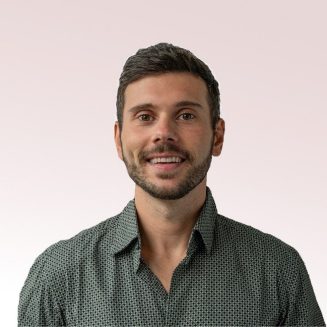
The expert provided the editorial team with advice and input for this article. Marco Pisanello is a physiotherapist who works for the Helsana health consultation service. He assists customers with questions concerning the musculoskeletal system and exercise.

Newsletter
Find out more about current health issues every month and get all the information you need about our attractive offers from all Helsana Group companies * delivered by e-mail to read whenever it suits you. Our newsletter is free of charge and you can sign up here:
We did not receive your information. Please try again later.
* The Helsana Group comprises Helsana Insurance Company Ltd, Helsana Supplementary Insurances Ltd and Helsana Accidents Ltd.