Exercising in the heat: practical tips for the summer
Is exercising in hot weather good for you? How hot is too hot? Find out more about exercising in summer and get some tips on jogging, cycling or going to the gym on hot days.
Overview of topics
Beating the heat and staying active
Heat can pose a serious threat to people, animals and the environment. High temperatures have an impact on our health and limit how hard we can push ourselves. But what is heat, why is it more difficult to exercise in hot weather and how can you stay active in the summer months without putting your health at risk?
What is heat, and at what point does it become dangerous?
Heat describes the unpleasant sensation that many people experience when the air temperature is too high. Increased temperatures and long hot spells put a strain on our bodies and our health. They can lead to cardiovascular and respiratory diseases and impair our mental and physical abilities.
Experts classify heat risk into five distinct levels:
- Level 1 (summer temperatures) does not represent a health risk. However, some people will still feel uncomfortable in these temperatures.
- From level 2 onwards (average daytime temperature of at least 25°C for one or two days, without significant cooling overnight), there is a moderate risk of circulatory problems and physical discomfort.
- Level 3 (average daytime temperature of at least 25°C for at least three consecutive days, without significant cooling overnight) involves a significant risk of circulatory problems and physical discomfort.
- Level 4 (average daytime temperature of at least 27°C for at least three consecutive days, without cooling overnight) represents a major hazard to our bodies. There is a high risk of circulatory problems and physical discomfort.
- Level 5 refers to extreme heatwaves that have not yet occured in Switzerland.
The combination of heat and high humidity makes life particularly difficult for our bodies. This is because the human body needs to maintain a constant body temperature between 36°C and 39°C. That’s why we sweat when it’s hot or when we’re physically active; when the sweat evaporates, the body cools down. If the humidity level is high, however, sweat hardly evaporates at all, meaning the cooling effect is lost.
Why is exercising more difficult in the heat?
Many people like to be physically active on a regular basis, including in warmer weather. However, exercising is often more difficult in the summer months than in spring or autumn. There are several reasons for this:
- The body needs more energy to compensate for the higher external temperature. This makes it less resilient.
- The body doesn’t cool down as quickly because sweat takes much longer to evaporate.
- If you wear warm, tight-fitting clothes, air cannot circulate and sweat cannot evaporate. This makes your body less effective at cooling itself down.
- When you sweat, you lose fluids and important minerals such as electrolytes, adding to the feeling of exhaustion.
- Exercising in the heat places more strain on your circulation. Your heart pumps more blood to your skin in an effort to carry heat away from the body. As a result, less oxygen reaches the muscles, which means they don’t work as well – and you feel weaker.
Bear in mind that even though exercising in the heat is more of an effort than in cooler temperatures, this doesn’t mean the body burns significantly more calories. We do sweat more, and we may lose weight as a result, but that’s only because we’re losing a lot of fluids. Once they’ve been replenished, your body weight will increase again.
Some people find exercising in temperatures above 27°C challenging, while others like to stay active even when the mercury reaches 30°C. The decisive factor is how much your body sweats and how well it compensates for the heat. In temperatures above 30°C, however, experts recommend sticking to shorter workouts and reducing the intensity. People with cardiovascular disorders are advised to avoid exercising in temperatures above 25°C. There is no set temperature limit for exercise when it comes to children and young people. However, when temperatures reach around 30°C and humidity is high, they are also at risk of heat exposure.
Everyone – children, young people and adults – needs to make sure they drink enough fluids when they exercise in the summer. You should stop your session immediately if you notice any of the following warning signs: goosebumps or chills despite the heat, headaches, nausea, vomiting, dizziness, confusion or disorientation, an unusual drop in energy levels, palpitations or cramps. Seek shade, cool your body down and supply it with the electrolytes it needs. Call the emergency services if you suspect you might be suffering from heatstroke. You can find out how to recognise heatstroke below.
Exercising in the heat: possible consequences
When exercising in high temperatures, you may experience any of the following:
- Dehydration: with dehydration, the body loses more fluids than it absorbs. Initial symptoms included feeling thirsty, having a dry mouth and sweating less. In cases of severe dehydration, you may feel dizzy. You could also faint or become confused. In very pronounced cases, there is a risk of shock, organ damage or even falling into a coma.
- Heat cramps: exercising in summer causes you to lose salts and minerals. If you only drink water, this will also dilute the minerals in your body. This can cause sudden, painful muscle spasms in your arms, legs and abdomen.
- Heat exhaustion: in this case, fluid and mineral deficiencies are more pronounced than they are with dehydration or heat cramps. Heat exhaustion can manifest itself in the form of headaches, nausea and dizziness. Other symptoms include vomiting, aching muscles and blurred vision. Unlike heatstroke, however, the body temperature usually stays below 40°C.
- Heatstroke: with heatstroke, the body temperature rises to over 40°C, and the brain no longer functions properly. This causes confusion and disorientation. You may also faint, and your coordination will be impaired. It’s important to act quickly and call the emergency services; heatstroke can be fatal if not treated promptly, as it damages organs such as the heart and lungs. Remember that heatstroke can also occur several hours after exercising in the heat.
Exercising in the heat: tips
There are various tips that can help make exercise easier in summer. They apply regardless of the type of activity:
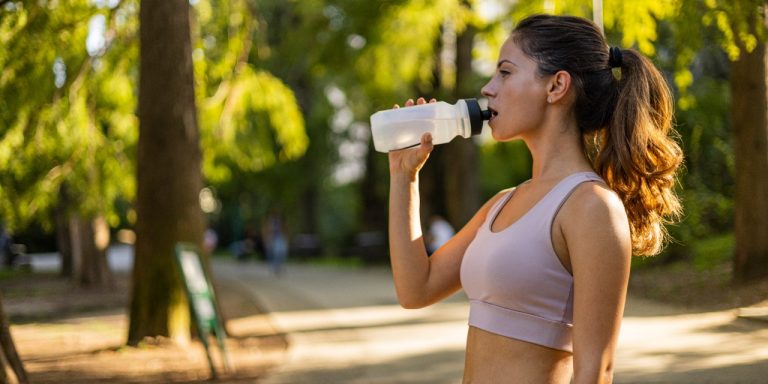
- Drink plenty of fluids: don’t wait until you’re very thirsty – start taking on fluids straight away. You should aim to drink a small amount, around 120 to 240 millilitres, every 15 to 20 minutes. Grab a sports drink with electrolytes if you’re going to be exercising for longer. Compare your weight before and after your session: every kilo you’ve lost corresponds to about a litre of liquid. Ideally, you should replenish these fluids again after your workout.
- Pick the right time of day: Try to exercise early in the morning or in the evening. Avoid sporting activities in the heat of midday and the afternoon sun.
- Take a break: be sure to take regular breaks, ideally in a cool, shaded spot.
- Wear breathable clothing: opt for lightweight, airy fabrics that wick sweat away from the body. You can buy special sportswear designed to do just that.
- Pay attention to heat warnings: check for any warnings before you head out to exercise. Reduce the duration and intensity of the activity you’re doing if extreme temperatures are predicted.
- Avoid alcohol: alcohol promotes fluid loss, which is already significant during hot weather and exercise. This increases the risk of dehydration and overheating. Alcohol also dilates the blood vessels, making it difficult for the body to regulate its own temperature.
- Think about your medication: certain types of medication promote urination, while others influence the production of sweat. This makes it harder for the body to adapt to the heat and regulate its own temperature. If you are taking regular medication and plan to exercise in the heat, speak to your doctor beforehand.
- If you’re ill, take a break: don’t work out when you’re sick. Fever, colds and aches and pains all put a strain on the cardiovascular system. Exercising in summer while ill only increases the risk of complaints.
Exercising in temperatures of 30°C or higher is no more effective than doing so in cooler temperatures. However, if you exercise in high temperatures on a regular basis, you may develop more of a tolerance for the heat over time. This process is called acclimatisation and takes 7 to 14 days. The body gradually adapts to the heat during this time; it starts sweating earlier, and sweat production increases, which improves blood circulation. This keeps the body’s temperature more stable, leaving it better equipped to cope with physical exertion. Start with short, moderate training sessions in the heat, ideally in the morning or evening, then gradually increase the duration and intensity of your workouts. Remember to drink enough fluids and take regular breaks. You should also make sure your exercise regime is balanced, by combining moderate exercise with endurance sports and resistance training.
Which kinds of exercise are best when it’s hot?
Any kind of exercise is fine in principle, as long as you protect yourself from the heat. We’ve put together a list of important points to bear in mind for specific activities such as jogging, cycling and going to the gym.
Jogging in the heat
For longer runs, it’s best to take a small backpack or bumbag with enough space for a drink. Cover your head with a scarf or a cap when running on sunny routes. On shaded routes (in a forest, for example), it’s better not to wear a head covering, since the body emits most heat via the head. Cool your body down before you go jogging, by having a shower or putting on a damp T-shirt, for example. This will help you lower your core temperature, meaning you won’t start sweating as quickly and your body will hold onto fluids for longer. You should also reduce your running speed and the duration of your session and avoid HIIT altogether.
Going to the gym in hot weather
Air-conditioned gyms are ideal for exercising in summer. There’s no direct sunlight or high temperatures to contend with, and you don’t need to find a shaded spot when taking a break. You’ll also have other people around if you do have any problems. But don’t forget to take breaks and make sure you don’t overdo it.
If your gym doesn’t have air conditioning, good ventilation should be enough. However, if that’s not available either, working out will be much more of a challenge. It’s best to listen to your body in these situations and avoid intensive workouts.
Cycling in the heat
The head and neck are sensitive to sunlight, so you should wear a cap or hat when you go cycling. Wearing a thin cloth underneath your helmet can also provide protection, while a damp scarf can help keep you cool as well. Routes through forests or along rivers are cooler than exposed routes. If you’re planning on taking a longer route, look for rest areas and public drinking fountains before you set off. Check your bike when you’re out and about, since the tyres, brakes and lights may all be affected by heat. If you have an e-bike, always leave it in the shade and remove the battery, as this is also sensitive to the heat.
Hiking in the heat
Choose routes up the north or west face when hiking in the mountains on sunny days, as these will be more shaded in the mornings. Remember to check the weather forecast as well; the weather can change rapidly in the mountains, and thunderstorms are common when temperatures are high. That’s why you should also plan for emergency descents. Adequate sun protection (a cap or hat and sun cream) is also essential, as the sun’s radiation increases at high altitudes.
Playing tennis in the heat
The breaks in play in tennis matches – when players switch sides, for example – are advantageous in the heat, giving the players the opportunity to rest between games. You should extend these recovery times if necessary, and postpone competitions to days or times of the day when temperatures are expected to be lower.
Playing football in the heat
Be sure to schedule regular breaks in your training sessions when it’s hot. The same applies to matches: one or two additional drink breaks per half are recommended. You can discuss this with the opposing team in advance. Cool off during the break with cold towels, ice packs or even a quick dip. When temperatures are very high, a shorter game time is also a good idea.
Yoga in the heat
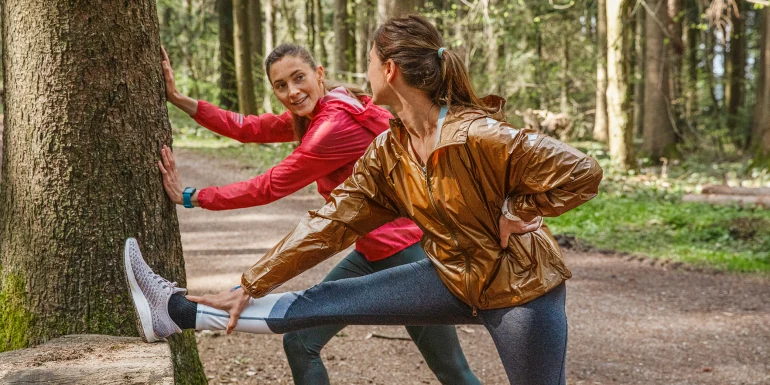
On hot days, gentle yoga is a good choice. You might want to practice calming breathing techniques, do some light stretching or try some relaxed poses. However, you should avoid holding positions for too long or intensive sessions. Location is also important: find a shaded, airy spot or grab your mat and retreat to the cool of the cellar – whichever suits you best.
Swimming in the heat
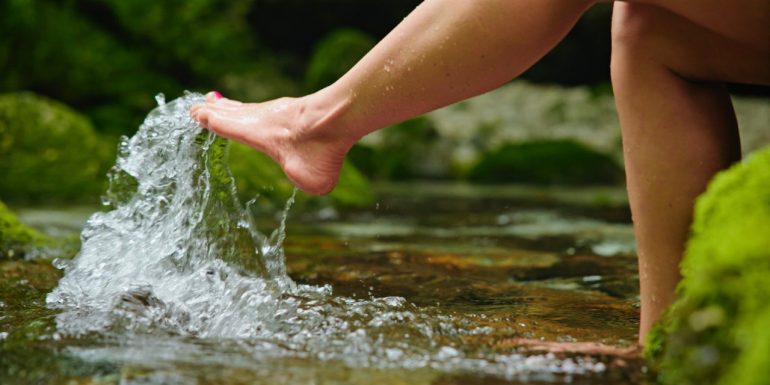
Many people are drawn to the water in summer, but the difference in temperature can sometimes be a shock to the system. When you jump into cold water, your blood vessels constrict rapidly and your blood pressure rises, putting added strain on your circulation and heart. So give your body time: take a cool shower beforehand and ease yourself into the water gradually, submerging your arms first, followed by your upper body. This will give your body a chance to acclimatise to the cooler temperature.
Hypothermia is also possible, even in warmer weather: if you stay in the water for a long time, the body needs a lot of energy to keep the organs working properly. This leads to a loss of muscle strength, which makes it more difficult to swim back to shore. Make sure you don’t spend too long in the water, dry yourself thoroughly when you get out and warm yourself up if you start shivering.
Tip: some swimming pools offer courses such as aqua jogging and water aerobics. These are a great way to stay active even when it’s hot and cool down at the same time.
If you follow the right advice, it’s perfectly fine to exercise in the heat. Make sure you drink enough fluids, schedule regular breaks and pick a suitable time of the day to work out. Bear in mind that babies, children, older people, pregnant women and people with pre-existing conditions are more sensitive to the heat. When exercising in summer, the important thing is to take extra care and not push yourself too hard.

The specialist provided the editorial team with advice and input for this article. Andrea Bovisi (BSc BFH dietitian) works in the Helsana Health Consultation Service. She helps customers on issues to do with nutrition and health promotion.
Newsletter
Find out more about current health issues every month and get all the information you need about our attractive offers from all Helsana Group companies * delivered by e-mail to read whenever it suits you. Our newsletter is free of charge and you can sign up here:
We did not receive your information. Please try again later.
* The Helsana Group comprises Helsana Insurance Company Ltd, Helsana Supplementary Insurances Ltd and Helsana Accidents Ltd.