Wasp stings: symptoms, allergy & treatment
A wasp sting can be harmless, but it can also trigger severe complaints. Find out what a sting looks like, what helps reduce swelling, how an allergic reaction manifests and when you need to seek medical assistance.
Overview of topics
What does a wasp sting look like?
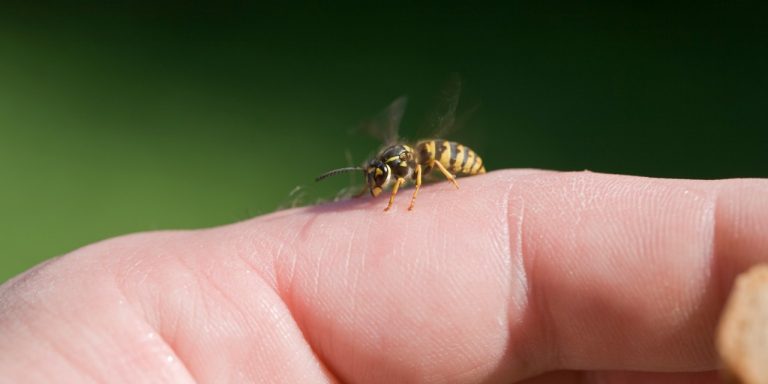
Wasps are mainly active in the late summer months. They fly particularly often in warm, dry weather and like to build their nests close to humans. That’s why you’re likely to be stung on the foot when walking barefoot in the garden or through a meadow. Stings on the finger are also typical, for example, when you’re drinking from an open bottle or eating outdoors.
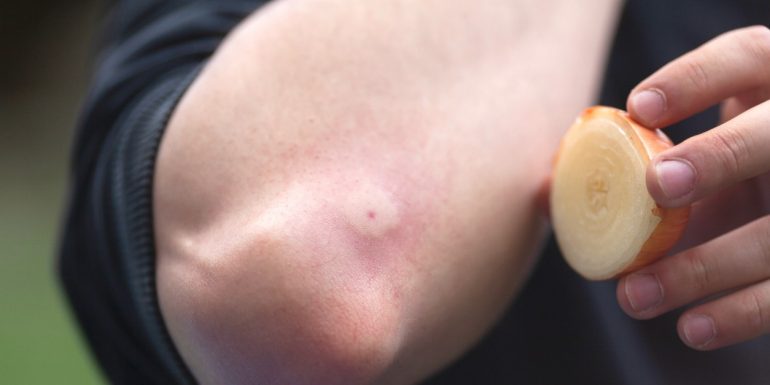
A wasp sting occurs when a wasp pierces the skin with its stinger and injects a venom. This venom serves as a defence and triggers a localised immune response in the human body. The immune system receives a danger signal, which then releases inflammatory messengers. The sting causes swelling and a red circle around the sting site, due to a localised circulatory response.
A single wasp sting is harmless from a medical point of view if there is no allergic reaction. The swelling usually subsides within a day.
The difference between a bee sting and a wasp sting becomes apparent when you look closely at the sting site. A bee sting can often be recognised by a small, dark spot in the middle. This spot is the stinger, which remains stuck in the skin. The stinger has barbs, so the bee loses it when it stings. A wasp sting does not leave a stinger in the skin: the wasp retracts its stinger afterwards and is able to sting again.
Wasp stings: progression & symptoms
A wasp sting almost always causes an immediate reaction in the skin, with the affected area usually changing within a few minutes. Doctors consider a reaction to a wasp sting normal if the complaints are limited to the sting site. The most common symptoms include:
- Pain: wasp stings often cause a burning sensation. Many people find the pain particularly intense in the first few minutes.
- Itching: a wasp sting usually itches at the sting site, but it is not as itchy as a mosquito bite. The itching is caused by localised skin irritation.
- Swelling: after a wasp sting, the surrounding tissue swells up. This is a physical reaction to the injected venom and subsides significantly after a short time if there are no further complications.
- Redness: a wasp sting often leads to visible redness of the skin.
The skin changes usually occur at the same time but vary in intensity. In most cases, the reaction remains limited to the area around the sting. A wasp sting becomes critical when it is on the head, particularly in the mouth or throat: even slight swelling there can narrow the airways. A sting in these locations is considered a medical emergency and requires immediate medical treatment.
Wasp stings: allergic reaction
In some people, a wasp sting triggers an allergy. The first complaints usually appear within a few minutes. If symptoms occur beyond the sting site, this is an indication of an allergic reaction, which often affects the entire body and requires special attention. The following symptoms indicate a reaction of this nature:
- Rash: after a wasp sting, the rash spreads beyond the sting site. Redness, itching and welts may occur all over the body.
- Swelling: the sting site often swells significantly and sometimes reaches several centimetres in diameter. An allergic reaction can cause swelling in other parts of the body as well: swelling of the face, including the lip or tongue, is typical after a wasp sting.
- Dizziness: a wasp sting often leads to dizziness in combination with a general feeling of being unwell. Occasionally, a wasp sting can cause additional headaches. In severe cases, blood pressure drops sharply, leading to circulatory problems or even fainting.
- Shortness of breath: narrowed airways, wheezing and shortness of breath are some of the signs of a severe allergic reaction.
- Vomiting: an allergic reaction sometimes triggers gastrointestinal complaints. Typical symptoms include abdominal pain and severe nausea after a wasp sting. The symptoms sometimes worsen and cause vomiting.
Symptoms can vary from person to person. Whether an allergic reaction will occur cannot be reliably predicted beforehand. If you notice complaints like these for the first time or if your reactions worsen after a wasp sting, seek medical assistance immediately. Shortness of breath, circulatory problems or loss of consciousness may indicate anaphylactic shock. In this case, call the emergency services without delay.
If you know you have an allergy, use your emergency kit immediately.
A wasp sting does not strengthen the immune system – on the contrary: the venom puts strain on the body and may trigger excessive immune responses. The long-term consequences of a wasp sting range from severe swelling to anaphylactic shock. In the case of a severe allergy, desensitisation under medical supervision may be a preventative option. During this process, the body receives highly diluted insect venom in increasing doses over a long period of time, with the aim of reducing the immune response in the event of future wasp stings.
Immediate steps if you get stung by a wasp
Stung by a wasp? You’ll want to know what works best, and quickly. If there are no signs of an allergic reaction, these measures offer immediate help:
- Remove the stinger: when you get stung by a wasp, the stinger rarely remains stuck in the skin. But if it is visible, it’s advisable to carefully remove it – ideally with tweezers or a flat edge such as a credit card.
- Cool the affected area: as a rule, cold eases the pain and reduces the swelling of the wasp sting. Wrap ice cubes in a clean cloth or hold a cold, damp cloth on the sting site.
- Elevate the sting site: if the wasp sting is on your hand, arm, leg or foot, elevating the affected area can help, as it slows the blood flow and relieves the swelling and the feeling of pressure.
- Destroy the venom: do not be tempted to suck the venom from the wasp sting out with your mouth. This will make it spread through your body. Use a suction pump from the pharmacy instead. Alternatively, a wasp sting heat pen destroys the protein structure of the venom at the sting site itself.
A wasp sting is unsettling for a child, but is usually harmless. If the complaints are limited to the sting site, there is generally no need to worry. Comfort your child and gently cool the affected area. Watch the sting closely: if your child experiences whole-body skin changes or develops a fever, they may be having an allergic reaction. Contact the emergency services immediately or go to the nearest emergency room.
When should you see a doctor if you get stung by a wasp?
In most cases, wasp stings do not lead to further complications. Nevertheless, there are exceptional situations in which medical advice is necessary. The following information will provide some guidance:
- Allergies: if you know you are allergic to wasp venom or if you have any noticeable complaints such as a fever, you need to see a doctor quickly.
- Inflammation: if a wasp sting is inflamed, there will be increased redness and swelling. Pus oozing from the wasp sting is often a sign of a bacterial infection. In rare cases, an untreated inflamed wasp sting can lead to blood poisoning.
- Worsening of symptoms: if the symptoms persist or worsen after a sting, a medical examination is recommended.
- A sting on the head: a wasp sting on the eye, the outside of the throat or around the mouth can often be dangerous. Swelling in these regions can constrict the airways or potentially cause long-term damage.
- Risk groups: people with a weakened immune system or chronic illness usually react more sensitively. A wasp sting during pregnancy also requires extra attention, but is generally harmless for healthy pregnant women.
An otherwise harmless sting can have serious consequences for anyone with an allergy to bee or wasp venom. A wasp sting is usually classed as an accident. However, each insect bite is assessed individually. That’s why it’s important to report the sting as an accident Report an accident. Please submit the details directly to your insurance company using the designated reporting channels.
What home remedies and medications help if you get stung by a wasp?
Ideally, treat a wasp sting immediately. Cool the area quickly to reduce swelling and pain. Afterwards, various remedies can support the healing process. Many people turn to plant-based products or homeopathy, but the effect of these is not always scientifically proven. If you’re unsure, seek advice from a healthcare professional or pharmacy.
Treating a wasp sting with medication
There are various medications that alleviate the complaints of a wasp sting. Which remedy is appropriate depends on the strength of the reaction and the accompanying symptoms. For mild to moderate reactions, creams containing antihistamines and cortisone are often used to reduce itching, swelling and localised skin inflammation.
In case of an allergic reaction, an anti-allergy drug is usually used. If a wasp sting triggers an emergency, adrenaline can help. Adrenaline auto-injectors can be lifesaving for people with allergies: adrenaline is a hormone that narrows the blood vessels in the event of a drop in blood pressure and stabilises the circulation within a few minutes.
Home remedies to relieve the symptoms
Some people use home remedies to alleviate the symptoms caused by a wasp sting. A halved onion can have an anti-inflammatory and cooling effect. Plant-based home remedies like this or homeopathic preparations can be helpful, but they also have their limitations.
Since a sting is always a minor skin injury, it is important to treat it carefully.
If your complaints persist for a long time, do not improve despite treatment or even get worse, you should consult a doctor. Do not take any risks – seek advice from a healthcare professional about appropriate steps to take.
Preventing a wasp sting: stay calm
Stay calm when a wasp approaches and avoid sudden movements. Cover food and drink outdoors. Wear shoes when walking on grass: many stings happen while eating, drinking, gardening or walking barefoot.
You can never completely rule out the possibility of a sting. If it happens, let those around you know immediately – especially if you are aware that you have an allergy. Monitor your symptoms over the next few minutes and hours. Seek medical assistance as soon as the complaints worsen.

The specialist provided the editorial team with advice and input for this article. Bettina Rieser (pharmaceutical assistant and social insurance specialist) works for Helsana’s health consultation service. She helps customers with issues to do with family and complementary medicine.

Newsletter
Find out more about current health issues every month and get all the information you need about our attractive offers from all Helsana Group companies * delivered by e-mail to read whenever it suits you. Our newsletter is free of charge and you can sign up here:
We did not receive your information. Please try again later.
* The Helsana Group comprises Helsana Insurance Company Ltd, Helsana Supplementary Insurances Ltd and Helsana Accidents Ltd.