
Sun cream for babies? Reliable protection from the start.
When is it safe to use sun cream on babies? Which sun cream is suitable for babies? How can you tell if your baby has sunburn? Find out how to protect your child from the sun.
Overview of topics
From what age is sun cream suitable for babies?
Baby skin is very sensitive and reacts more quickly to sunlight, heat and cosmetic ingredients than adult skin, so avoid sun cream if possible during the first six months of your baby’s life. During this time, make sure that your baby is not exposed to direct sunlight – especially between 11 am and 3 pm, when the sun is at its strongest and ultraviolet (UV) radiation is at its most intense. Keep your baby in the shade and protect them with loose-fitting, tightly woven clothing with long sleeves and long legs and with a suitable hat.
From about six months of age, babies can tolerate sun cream – but only when carefully applied to small, uncovered areas of skin such as the face, hands or feet. Even for babies over six months of age, sun cream should complement other protective measures, rather than being the main form of protection. During the first year of your baby’s life, continue to avoid direct sunlight and use clothes and shade to protect them.
Also pay attention to the UV index, which indicates how strong the sun’s UV radiation is. The higher the UV index, the faster sunburn occurs if the skin is not protected. A UV index of one and two is considered harmless, from three onwards sun protection is required, and from eight upwards it’s recommended to stay out of the sun. Also bear in mind that even when the sky is overcast, up to 80% of the UV rays penetrate through the cloud cover. UV radiation is also stronger in the mountains, near snow, water or sand, and near the equator – make sure your baby is extra protected in these places. Many popular weather apps also include information about the UV index.
Which sun cream is safe for babies?
A safe sun cream for babies protects against UV radiation without irritating their sensitive skin. The filter type and the ingredients of the creams are the key factors.
Are chemical or mineral sun creams better for babies?
For babies, a mineral sun cream is recommended. Mineral (physical) sun creams cover the skin like a protective film and reflect and absorb UV rays. Physical sun creams act immediately after application, are well tolerated and are therefore good for babies. Choose a high sun protection factor (SPF 50 or 50+) to reliably protect your child’s sensitive skin.
Chemical sun creams penetrate the top layers of the skin, absorb UV rays and release them as heat. Because babies’ skin is thinner and more permeable, it can be sensitive to certain ingredients found in these creams. Some older chemical UV filters are also suspected of having a hormonal effect. However, according to current data, modern filters approved in the EU are safe. Chemical sun creams only offer full protection after 20 to 30 minutes, which is why it’s important to apply them well before exposure to the sun.
The sun protection factor (SPF) indicates how long a sun cream prolongs the skin’s natural protection time. The natural protection time depends on the skin type and varies from person to person. It is particularly short for light skin types.
Important: the protection time, calculated based on the SPF, is a theoretical value. It is an accurate value under laboratory conditions, but in practice, the protection time is much shorter. This is because an intensive UV index, sweating, water, exercise and friction greatly reduce the protective effect of sun cream, as does using an insufficient amount. Therefore, sun cream should not be used to prolong sun exposure: it provides additional protection and is not a substitute for shade, suitable clothing and a hat.
Babies have virtually no natural skin protection against UV rays. Even just a few minutes of unprotected exposure to the sun can result in skin redness or sunburn. Also bear in mind that after the winter months, adults’ skin is also particularly sensitive, as our natural protection is reduced due to a lack of UV exposure.
Sun cream for babies: how to apply correctly
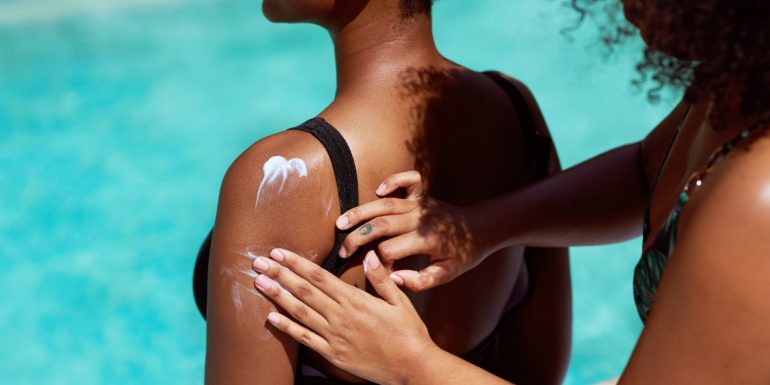
Apply the cream evenly and generously. As a rule of thumb, around two milligrams of sun cream per square centimetre of skin. For adults, this is about a teaspoon on the face and neck. For babies, sun protection on the face, neck, hands and feet is particularly important, as these areas are often exposed. Sun protection sprays are only to be used on babies with caution. When spraying, the product often spreads unevenly, and the amount applied is difficult to control.
How long a mineral sun cream will protect your baby depends on the SPF, their activity level and any contact with water. Prevent sunburn by reapplying your baby’s sun cream approximately every two hours. If your child has been very active or has been swimming, it’s a good idea to reapply the cream at shorter intervals. Remove the sun cream in the evening with lukewarm water or a mild cleansing product for babies.
Also bear in mind that even dark-skinned babies get sunburnt. Although dark skin contains more melanin than light skin and therefore offers a certain amount of natural protection, this protection is minimal in infants. That’s why even babies with dark skin need consistent sun protection: plenty of shade, protective clothing and, depending on their age, suitable sun cream on uncovered areas of the skin.
A red rash, itching or small blisters are common signs of intolerance to a product. Remove the cream immediately with lukewarm water and a mild cleansing product for babies. Cool the affected areas with a damp, soft cloth. Seek medical advice if the redness does not improve within a few hours or if your baby appears restless.
Sun protection for babies: more than just applying sun cream
Sun cream alone is not sufficient sun protection for your baby. Consider the following additional protection measures:
- Sun protection clothing for children: choose clothes with long sleeves and long legs. Thick, light fabrics protect your baby better from the sun than thin, airy materials. Make sure you choose a hat with neck protection to protect your child’s head. Special clothing with a tested UV protection factor (UPF, ideally UPF 50+) will give your baby extra sun protection. Just as important: sunglasses with 100% UVA and UVB protection (UV400 standard).
- The right place in summer: shade offers the best sun protection. It reduces UV radiation by more than 50%. However, not all shade offers the same protection: the shade of trees is the best option – it blocks more sun than many umbrellas. A UV tent also provides your baby with constant sun protection. Also bear in mind that your baby can even get sunburnt in the shade.
- What to do in strong sunlight: avoid direct sunlight. In summer, protect your baby especially between 11 am and 3 pm, when the sun is at its most intense. Also make sure they drink enough: breastfeed or give your baby a drink regularly. Look out for signs of overheating, such as restlessness, intense sweating or reddened skin, and move to a cooler place if necessary.
Sunburn can sometimes appear quickly in babies. The typical signs are reddened, warm or tight skin, increased restlessness and persistent crying. Sometimes the body temperature is also elevated. Always take sunburn in babies seriously. Consult a doctor if your baby is younger than 12 months old and gets sunburnt – even if the skin change appears only mild. Older children should also be examined by a doctor if they develop blisters, fever and severe pain.
In babies, sunburn and overheating often occur together. That’s why the doctor will not only check your baby’s skin but also identify sunstroke or other heat-related complications.
Sun cream for children: which one is suitable?
Your child’s skin will change with age but will remain more sensitive than that of adults. You should therefore continue to apply a sun cream they tolerate well.
Mineral sun creams and modern, well-tolerated chemical sun creams are suitable for children, provided they are specially developed for children. Whether the sun cream is mineral or chemical is not as important as the mild, non-irritating composition of the sun cream. Look for the following features when buying a sun cream:
- Broad-spectrum UV protection (UVA and UVB protection) through mineral or modern chemical sun creams especially for children
- Free from fragrances, perfumes and alcohol
- Dermatologically tested
- High sun protection factor (SPF 50 or 50+)
Tip: make applying sun cream a routine – before nursery or preschool, while playing outdoors or while doing sport.
Sunburn at a young age increases the risk of skin cancer later in life. Always ensure proper sun protection, even as your child gets older. The combination of adequate shade, protective clothing and suitable sun cream will reliably protect your child from harmful UV radiation. Make sun protection a daily habit. This will teach your child to enjoy the sun safely from an early age.

Sabrina Stollberg is a specialist in general surgery recognised by the Swiss Medical Association (FMH) and a research associate in Helsana’s Public Health Sciences team. She provided the editorial team with advice and input for this article.
Newsletter
Find out more about current health issues every month and get all the information you need about our attractive offers from all Helsana Group companies * delivered by e-mail to read whenever it suits you. Our newsletter is free of charge and you can sign up here:
We did not receive your information. Please try again later.
* The Helsana Group comprises Helsana Insurance Company Ltd, Helsana Supplementary Insurances Ltd and Helsana Accidents Ltd.